The store page lists the non-combat content plainly: hunting, gathering, housing, farming and crafting, plus trading between players and the company and guild activities that hold a pioneer society together. That is not a side menu. It is a parallel progression path for players who would rather build than grind.
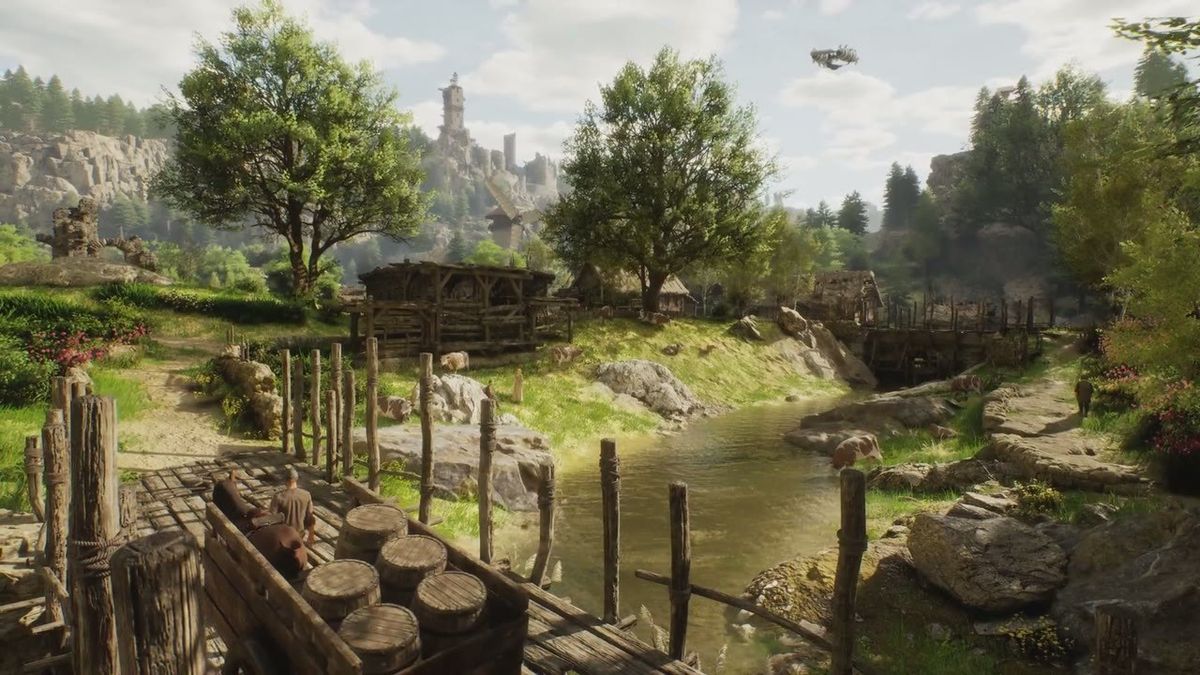
The five life skills
| Skill | What you do | What it feeds |
|---|---|---|
| Hunting | Track and kill creatures for hides, meat and reagents | Crafting, cooking-adjacent recipes, trade goods |
| Gathering | Harvest plants, ore and other node materials | Crafting, alchemy-style recipes, trade packs |
| Farming | Grow crops on your own land | Cooking, trade goods, repeatable income |
| Crafting | Turn materials into gear, consumables and furniture | Your own gear, the player market |
| Housing | Build and furnish a home | Storage, farming space, social hub |
The design intent is that these feed each other. Farming produces materials, crafting turns them into goods, housing gives you a place to do it, and trade moves the output to players who need it.
Why a combat player should care
Three reasons, in order of how much they matter.
Crafting fills gear gaps. Field bosses and dungeons drop gear, but the specific piece you need is often craftable before it is farmable. Recipes come from chests and from other players.
Trade is how you convert time into the thing you actually want. If you hate farming a field boss for one accessory, you can spend the same hours crafting and buy it.
Housing is a base. A home is storage, a farming plot and a social anchor in one. For a player who plans to stay through the nine-to-twelve-month Early Access window, that compounds.
Life skills are not power creep
Nothing in the life-skill loop raises your combat stats directly. A player who spends a week farming and crafting returns to combat exactly as strong as they left, but with more money, more recipes and a house. That is a deliberate split, and it means you can play the game as a builder without falling behind on the systems that matter to you.
Housing without the spreadsheet
The housing system exists, and it is one of the pillars XLGAMES lists for launch. What matters practically:
- Place it near content you replay. A house next to a field boss or a dungeon entrance saves more time than a house with a better view.
- Use it as storage first, decoration second. Inventory pressure is real in a game with five material types.
- Build for the farming plot. If you farm, the plot is the reason the house exists.
Housing is also social infrastructure. Companies and guilds need places to meet, and a decorated house is the cheapest recruitment tool in the game.
Making money without fighting
The economy in ArcheAge Chronicles is player-driven: recipes, materials and crafted goods all move between players. The reliable shapes are familiar.
Sell what you do not use. Field boss materials you cannot craft with are worth more to a crafter than to a vendor.
Specialise. A player who can make one desirable thing reliably makes more than a player who can make everything badly.
Watch the patch notes. XLGAMES has said it will refine progression and life skills during Early Access. Anything that changes a recipe or a material source moves prices.
How to run a life-skill session
A two-hour session that actually produces something:
- Spend twenty minutes gathering nodes on a route you already know.
- Farm the creatures that drop the material your recipe needs.
- Craft in batches, not one at a time; the value is in volume.
- List the output, then go do something else while it sells.
- Spend the profit on the one combat upgrade you have been putting off.
That last step is the point. The life-skill loop exists to fund the combat loop, and a player who never converts the profit back into gear is playing half the game.
Where it connects
Trade runs are the bridge between the two halves, and they are also where PvP gets interesting: XLGAMES has talked about wanting trade runs through PvP channels and guilds fighting over trade posts. Trade runs and the economy covers what is in the launch build and what is planned.
If you want the combat-side overview instead, progression sources maps the lanes that raise your character's numbers.